CAPE FOOD CULTURE — GUIDE
Cape Malay Food — Cape Town's Founding Cuisine
Three centuries of spice-route history on one table — what the dishes are, where they come from, and where to taste the real thing.
Cape Malay food is Cape Town's oldest cuisine, created from the 17th and 18th centuries by people brought — mostly enslaved or exiled — from Indonesia, Malaysia and India, fused with Dutch colonial cooking. The signatures are bobotie, bredie, denningvleis, sosaties and koesisters: aromatic, mildly spiced, sweet-savoury.
The short answer
Cape Malay food is Cape Town's oldest cuisine, created from the 17th and 18th centuries by people brought — mostly enslaved or exiled — from Indonesia, Malaysia and India, fused with Dutch colonial cooking. The signatures are bobotie, bredie, denningvleis, sosaties and koesisters: aromatic, mildly spiced, sweet-savoury.
This is heritage, not a theme. The cuisine lives in the Bo-Kaap and in family kitchens across the Cape Flats, and it deserves to be approached with its provenance intact. This guide covers the history briefly, the dishes properly, and where to taste the canon before you think about serving it at your own table.
Where it comes from
From the mid-1600s the Dutch East India Company brought enslaved people and political exiles from its eastern territories — Java, Sumatra, the Malabar coast — to the Cape. They cooked with the spice vocabularies of home using Cape ingredients, inside Dutch colonial kitchens, and the fusion that resulted became the city's defining food culture.
The flavour logic follows from that history: whole spices (cinnamon, cardamom, clove) rather than heat, fruit cooked with meat, slow braising for tough cuts, and an instinct for preservation techniques like pickling and drying that crossed oceans. It is a cuisine of adaptation, which is why it keeps absorbing fine-dining technique so gracefully.
The calendar matters too. During Ramadan the Bo-Kaap's tables fill at sunset with samoosas, daltjies and soups to break the fast; at Eid, bobotie and geelrys anchor the celebration table. Koesisters are a Sunday-morning institution year-round — the queues at Bo-Kaap bakeries before eight o'clock are their own piece of living heritage.
The dish lexicon
The canon in short order — what each dish is, and why it matters.
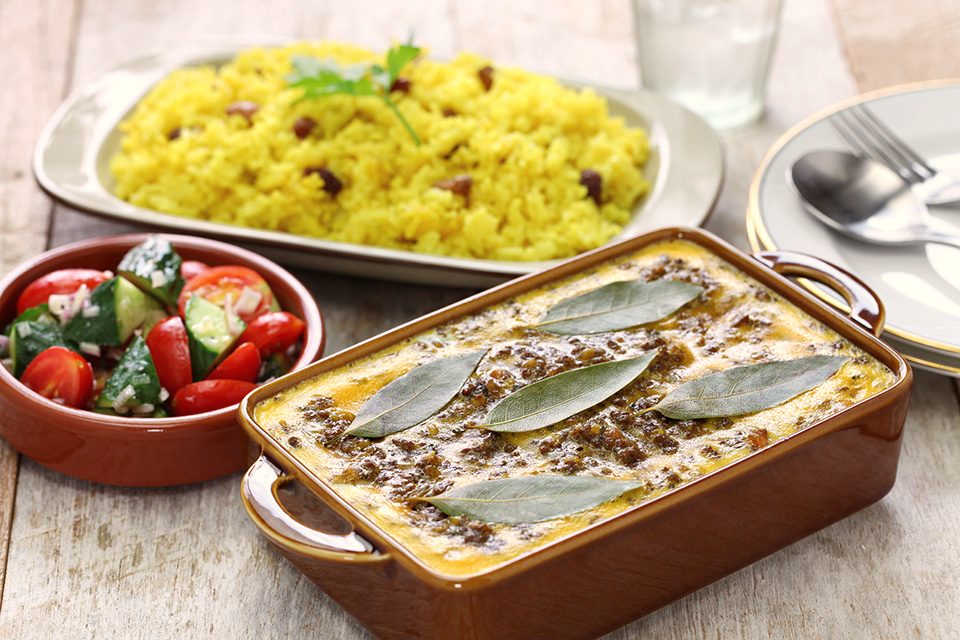
- 01Bobotie — spiced mince baked under an egg custard, lifted with dried fruit and served with geelrys (yellow turmeric rice); regarded as a national dish and the centrepiece of Eid tables.
- 02Tomato bredie — lamb or mutton on the bone, slow-stewed with whole spices and tomato, no added liquid; the definitive Cape winter stew.
- 03Denningvleis — tamarind-laced lamb, sweet-sour and dark; the dish Bo-Kaap Kombuis is known for.
- 04Sosaties — skewers in a curried apricot marinade; the bridge between Cape Malay kitchens and the braai grid.
- 05Samoosas and daltjies — the street canon: crisp pastry triangles and chilli bites, served before everything.
- 06Koesisters — spiced, syrup-soaked doughnuts dusted with coconut; not to be confused with plaited Afrikaans koeksisters.
- 07Waterblommetjie bredie — the spring stew built around the Cape's own water flower, in season from about September.
Where to taste it
Start in the Bo-Kaap. Bo-Kaap Kombuis serves the canon against the best view in the neighbourhood — the denningvleis is the order. Biesmiellah is the family-run institution for tomato bredie, bobotie and crayfish curry. For koesisters, follow the Sunday-morning queue culture at Bo Kaap Deli. All are halaal establishments, which is intrinsic to the cuisine's home community.
Cape Town also has halal fine dining now — The Happy Uncles in Salt River runs four-to-eight-course tasting menus — proof the cuisine holds its own at the white-tablecloth end.
Serving it at your own table
The cuisine's mild-spice, sweet-savoury profile makes it unusually good for mixed groups — children, spice-averse guests and adventurers all eat the same table. Our Cape Malay heritage dinner runs five courses through the canon with the storytelling intact, cooked in your villa or home.
On protocol: the cuisine is halaal by origin, and we serve it halaal-friendly with strict sourcing and separation protocols — halaal-certified suppliers, no pork cross-contact — rather than claiming a certification we do not hold. If your group requires certified halaal catering, tell us in the consult and we will say honestly whether we are the right kitchen for the occasion.
Questions, answered.
We update this guide annually — figures re-verified October 2026.
Related guides & services
Get an exact quote.
We handle everything else — menu, shopping, cooking, service, cleanup. Guaranteed.
Replacement-or-refund · Fixed itemised quote · Published cancellation tiers