HALAAL-FRIENDLY
Halaal-Friendly Private Dining in Cape Town — Strict Protocols, Honestly Stated
Cape Town has cooked halaal for centuries. Here is exactly what we do, what we source, and what we do not claim.
We are halaal-friendly with strict protocols — we are not certified. Certified halaal requires SANHA/NIHT-class certification with inspected separation, and until we hold it we will not use the word. What we do instead is documented below, line by line, so you can judge it against your own standard.
The honesty statement, first
We are halaal-friendly with strict protocols — we are not certified. Certified halaal requires SANHA/NIHT-class certification with inspected separation, and until we hold it we will not use the word. What we do instead is documented below, line by line, so you can judge it against your own standard.
For many of our guests — local families and visitors from the Gulf and beyond — these protocols are exactly what they need. For guests who require formal certification, we will say so plainly and point you to a certified provider.
Cape Town makes this easier than most cities. Halaal butcheries and suppliers are part of the city's food fabric — sourcing is not a workaround here, it is a supply chain we use every week.
The protocol, documented
Four commitments, applied to every halaal-friendly booking, and shared in writing with your quote so nothing depends on a phone conversation.
- Sourcing — meat and poultry from halaal-certified butchers and suppliers wherever possible; supplier certificates shared on request
- Separation — a dedicated prep sequence with cleaned-down surfaces, separate boards, knives and cookware for your event
- Kitchens — we cook in your villa or home kitchen, which means no pork cross-contact from a restaurant line; we agree the kitchen's status with you in the consult
- Service — a no-alcohol service option on request, with pairing alternatives like cordials, teas and zero-proof serves matched to the courses
The natural fit: Cape Malay
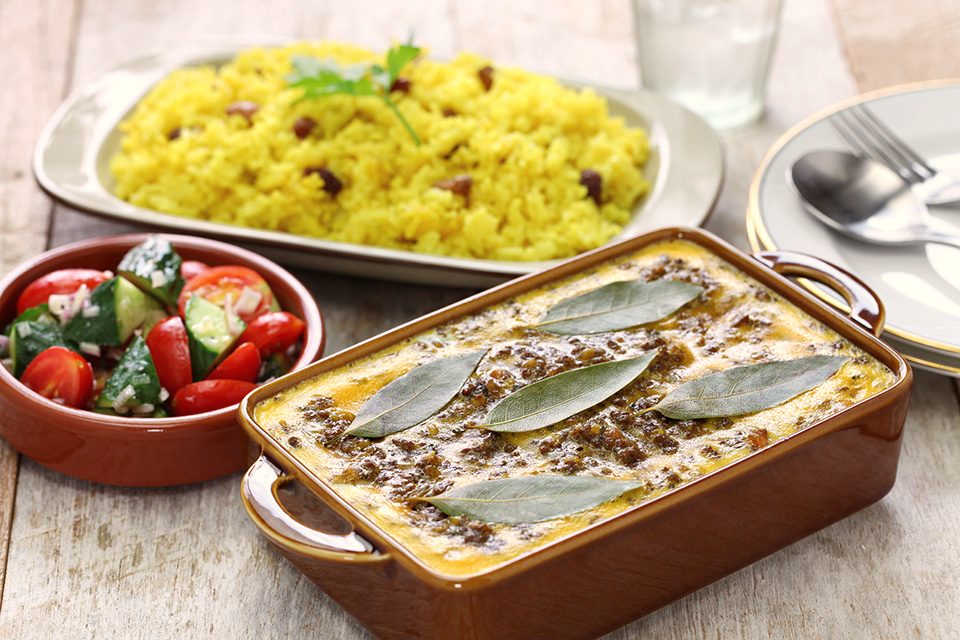
Cape Malay cooking is the Cape's own halaal-heritage cuisine — bobotie, tomato bredie, denningvleis, koesisters — developed over centuries in the Bo-Kaap. Our Cape Malay heritage dinner is the most natural halaal-friendly menu we run: five courses, from R1,200 per person, minimum four guests.
It is also simply one of the best things to eat in this city, and the menu we most often recommend to visitors who ask for something they cannot get anywhere else.
Beyond the heritage menu, any of our standard menus can run halaal-friendly under the same protocols — a plated dinner, a braai, canapés for a family gathering. The protocol travels with the booking, whatever the cuisine.
The certification roadmap
We are working toward formal halaal certification for a dedicated prep facility. Until that is in place, this page's language stays exactly as it is: halaal-friendly, strict protocols, no certification claim. When the status changes, the page changes — that is the whole point of publishing it.
In the meantime, the strongest guarantee we can offer is transparency: supplier certificates on request, the protocol in writing with your quote, and a consult where no question about sourcing or separation is unwelcome.
Questions, answered.
We update this guide annually — figures re-verified October 2026.
Related guides & services
Get an exact quote.
We handle everything else — menu, shopping, cooking, service, cleanup. Guaranteed.
Replacement-or-refund · Fixed itemised quote · Published cancellation tiers