CAPE FOOD CULTURE — GUIDE
A South African Wine Pairing Guide for the Table
Chenin, Pinotage, MCC and Constantia Sauvignon — the Cape's pairing logic, the estate benchmarks, and how to bring it to your own table.
The Cape's four pairing pillars: Chenin Blanc for seafood and spice, Pinotage for the braai, Méthode Cap Classique for canapés and celebration, and Constantia Sauvignon Blanc for anything from the cold Atlantic. Estate pairing experiences across the Winelands benchmark at R100–400 per person; a private sommelier pairing at your villa is priced as an add-on. from R450–650 pp per person.
The short answer
The Cape's four pairing pillars: Chenin Blanc for seafood and spice, Pinotage for the braai, Méthode Cap Classique for canapés and celebration, and Constantia Sauvignon Blanc for anything from the cold Atlantic. Estate pairing experiences across the Winelands benchmark at R100–400 per person; a private sommelier pairing at your villa is priced as an add-on.
The Cape makes world-class wine at a fraction of European prices, which changes the pairing arithmetic entirely: the bottle is rarely the constraint. What matters is the logic — and the logic is simpler than the wine trade pretends.
The four pillars
Chenin Blanc is the workhorse: South Africa's most planted variety runs from crisp and coastal to oaked and honeyed, and its acidity is the friend of snoek, yellowtail and Cape Malay spice. When in doubt at a Cape table, Chenin is the correct doubt-resolution.
Pinotage — the Cape's own crossing of Pinot Noir and Cinsault — was built for the braai. Its smoke-and-dark-fruit register meets lamb chops and boerewors on equal terms; choose a modern, restrained style rather than the coffee-bean caricatures.
Méthode Cap Classique is the Cape's Champagne-method sparkling, and the correct answer to canapés, oysters and the first forty minutes of any celebration. Franschhoek throws a festival for it every early December.
Constantia Sauvignon Blanc — from the oldest wine region in the country, inside the metro — is the classic partner for kreef with lemon butter and for summer linefish. The valley's historic sweet wine tradition (Vin de Constance style) closes the meal with dessert.
What estates charge for pairing — the benchmarks
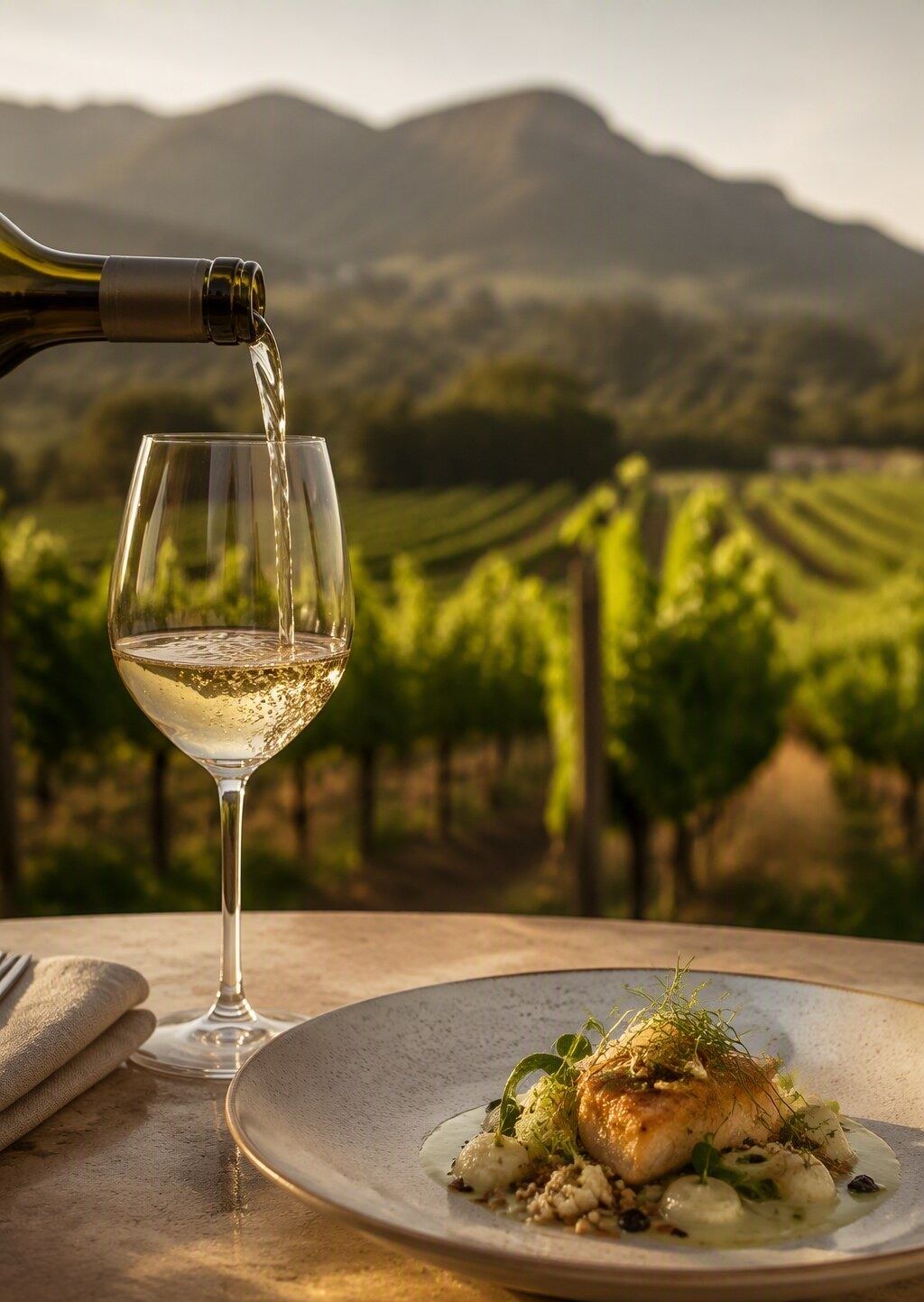
Pairing culture in the Winelands is deep and playful: wine-and-chocolate, wine-and-biltong, MCC-and-macaron and wine-and-cheese experiences are standard offerings across Stellenbosch, Franschhoek, Paarl and Durbanville, benchmarked at R100–400 per person. La Motte in Franschhoek runs a chef-led five-course food and wine pairing at R325 per person, booking essential.
Two implications for a private dinner. First, estate pricing proves a serious pairing need not be extravagant — the R100–400 band buys real experiences. Second, the estate format means travelling to them; the same logic at your own table is the sommelier add-on below.
An SA-only pairing is a statement, not a compromise
The premium end of Cape dining has already made this call: FYN pairs its World's-50-Best menu exclusively with South African small producers. An all-Cape pairing at a private table is a positioning choice — it tells the table they are somewhere specific.
Our sommelier pairing add-on works exactly that way: small-producer Cape wines matched course by course, hosted at your table, with the stories told properly. For Winelands stays and Constantia dinners it is the single highest-impact add-on we offer; our wine pairing and sommelier page carries the detail.
If you are building your own pairing rather than booking one, the sequence matters more than the bottles. Start cold and acidic — MCC or Sauvignon with whatever opens the meal — move through the aromatic whites with the fish or spiced courses, and land the reds with the meat: Pinotage for the braai, a Stellenbosch Cabernet for anything roasted. The dessert wine question answers itself in Constantia, where the valley's historic sweet wine style has closed Cape dinners for three centuries. One bottle per two guests per course is the planning ratio that never embarrasses anyone.
The sourcing rule behind all of it: buy the winery, not the supermarket shelf. Estate prices at the cellar door are honest, the staff pour the context with the wine, and a mixed case assembled across two afternoons in Stellenbosch or Constantia will outperform any equivalently priced restaurant list — because you chose it at the source, glass in hand.
Questions, answered.
We update this guide annually — figures re-verified October 2026.
Related guides & services
Get an exact quote.
We handle everything else — menu, shopping, cooking, service, cleanup. Guaranteed.
Replacement-or-refund · Fixed itemised quote · Published cancellation tiers